From Carlisle’s owner’s manual and the NRCA roofing glossary.
Flat roof maintenance means an inspection every six months and after storms, clear drains, scuppers and gutters, no water standing more than 48 hours after rain, tight seams and edge metal, and fresh sealant around HVAC curbs and pipes. Flat and low-slope roofs drain slowly, so small problems hold water on the roof longer, and they need more regular attention than a pitched roof.
We are the Afford-A-Pro team in Jasper. We install and maintain commercial roofs across the Sequatchie Valley, including TPO flat roofs, and we repair modified bitumen and built-up roofs. This guide covers a maintenance schedule, what to check, the care each membrane needs, and the mistakes that shorten a flat roof’s life. For our maintenance programs, see our commercial roof maintenance page.
In this guide
- Why flat roofs need more care
- A flat roof maintenance checklist
- Ponding water: the 48-hour rule
- Care by roof type: TPO, EPDM, modified bitumen and built-up
- Rooftop equipment and foot traffic
- Mistakes that shorten a flat roof’s life
- What a professional maintenance visit covers
- Flat roof maintenance questions
Why Flat Roofs Need More Care
A pitched roof gets rid of water in seconds. A flat roof moves it slowly toward drains, scuppers and gutters, so anything that blocks the path, like a pile of leaves, a sagging spot or a clogged drain, leaves water sitting on the membrane.
Flat roofs also carry most of a building’s equipment. Every HVAC unit, exhaust fan and pipe needs flashing and sealant around it, and those penetrations are where flat roofs most often leak. Dried, cracked sealant at penetrations, seams and flashing is the most common cause of commercial leaks.
A Flat Roof Maintenance Checklist
Carlisle, a single-ply membrane manufacturer, recommends an inspection at least every six months, preferably spring and fall, and right after any storm with heavy rain, high wind or hail. It also says roofs under tall trees may need more frequent visits, and that the roof should be checked after anyone services rooftop units. Here is what each visit should cover:
| Check | What to look for | When |
|---|---|---|
| Drains, scuppers and gutters | Leaves, dirt, trash or loose gravel blocking the flow | Every visit, and after leaf fall |
| Standing water | Puddles still there two days after rain | After heavy rain |
| Roof edge, walls and parapets | Loose edge metal, copings and membrane terminations | Every visit, and after high wind |
| The field of the roof | Punctures, blisters, splits and damage from blown debris or foot traffic | Every visit, and after hail |
| Seams and laps | Separation, lifted edges or wrinkles | Every visit |
| HVAC curbs and pipes | Cracked sealant, loose flashing, damage from service work | Every visit, and after service work |
| Grease and chemicals | Oil, grease or solvents on the membrane | Every visit on restaurants and shops |
| Interior | Ceiling stains, rust streaks or wet insulation | Any time |
Based on Carlisle’s owner’s manual and This Old House’s flat roof guide (updated March 6, 2026), which also recommends inspecting at least twice a year, typically spring and fall.
Carlisle adds one more item that owners skip: keep records. The warranty, maintenance and inspection logs, a log of who went on the roof and why, and invoices for any work. Those records are what a manufacturer asks for when you make a warranty claim. Our guide to how often you should have your roof inspected covers the schedule for every type of roof.
Ponding Water: The 48-Hour Rule
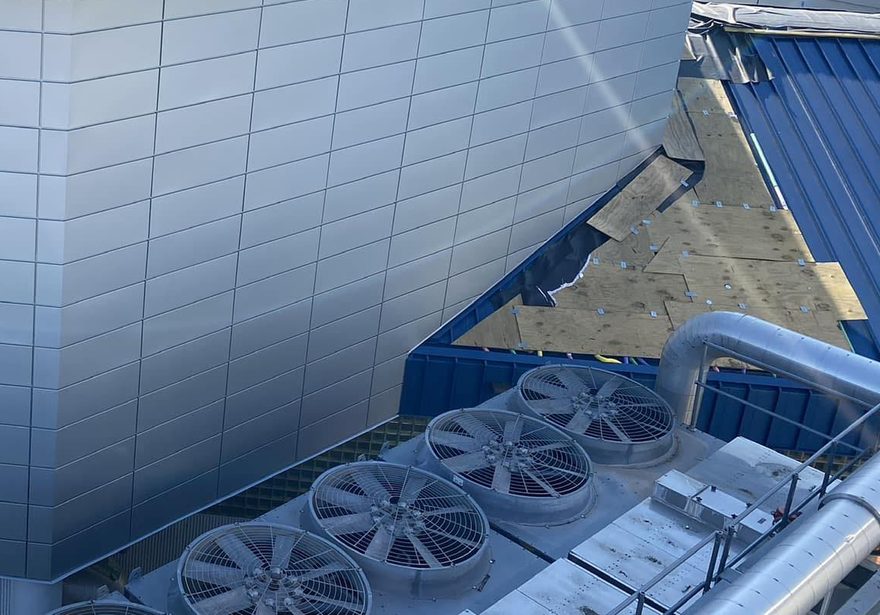
Some water on a flat roof after rain is normal. The National Roofing Contractors Association defines ponding as water that stays in low areas more than 48 hours after precipitation, in weather that would normally dry it. Carlisle’s manual says ponded water should evaporate within 48 to 72 hours. Either way, a puddle you can still see two days after a storm is a problem to fix, not a feature of the roof.
Standing water speeds up the wear on most membranes and adds weight to the deck. The usual causes:
- Clogged drains or scuppers. The easiest fix, and the reason drain clearing is on every visit.
- Debris dams. Leaves and dirt pile up against curbs and walls and hold water behind them.
- Low spots in the deck or insulation. Sometimes from heavy foot traffic, sometimes from the structure itself. These need a roofer to correct the slope.
If you find ponding, note where it sits and how long it lasts after rain, and have the roof checked. Ponding areas are one of the things we look for on every commercial roof inspection.
Care by Roof Type: TPO, EPDM, Modified Bitumen and Built-Up
The basics are the same for every flat roof, but each system has its own weak points:
- TPO and PVC. Check the heat-welded seams for separation. Carlisle says animal fats and vegetable oils must be removed regularly and the surface cleaned with soap and water, which matters on any building with kitchen exhaust.
- EPDM roof maintenance. This Old House says to check seams and flashing for loose adhesive, patch punctures promptly with a compatible kit, and avoid dragging tools or ladders across the rubber. Carlisle says not to exhaust fats or oils onto EPDM at all.
- Modified bitumen. Look for seam separation, lifted edges and wear or cracking in the cap sheet, and reapply reflective coatings periodically (This Old House).
- Built-up (tar and gravel). Keep the gravel evenly spread and replace it where it has worn away; look for cracks, blisters and bare asphalt (This Old House).
Not sure which system is on your building? Our guide to commercial roofing types shows how to tell them apart.
Rooftop Equipment and Foot Traffic
Many flat roofs get regular visits from people who are there for something else: HVAC technicians, electricians, satellite and solar installers. Carlisle’s guidance is practical:
- Inspect the membrane and flashing around rooftop units after every service visit.
- Put down walkways if the roof gets regular traffic, or if equipment on it is serviced every 30 days or more often.
- Keep petroleum products and chemicals off the membrane.
- Restrict roof access and keep a log of who goes up and why.
Mistakes That Shorten a Flat Roof’s Life
- Patching a single-ply roof with asphalt roof cement. Carlisle says to use its lap sealant or a good-grade rubber caulk for an emergency patch, not asphaltic roof cement.
- Letting anyone alter the roof. Carlisle’s warranty is void if anything is cut through or attached to the roof, from new curbs and pipes to solar panels, without its written authorization. Check your own roof’s warranty before any addition.
- Waiting for leaks. By the time a stain shows on the ceiling, the leak has usually been going for a while, and wet insulation or rust streaks inside mean it already has.
- Skipping the fall cleanup. A season of leaves on a flat roof is a season of clogged drains.
What a Professional Maintenance Visit Covers
Our commercial maintenance visits follow the same ground: a full inspection with photos, all drains, scuppers, gutters and downspouts cleared, HVAC curb and penetration seals inspected and resealed as needed, flashing and edge metal checked, debris removed, minor repairs made on the spot, and a written condition report you can keep for warranty and insurance purposes. We schedule around your business hours, including early mornings, evenings and weekends.
We recommend professional maintenance at least twice a year, spring and fall, with an extra inspection after hail, high winds, or heavy snow on the plateau around Tracy City and Monteagle. Roofs with a lot of HVAC equipment or regular traffic may benefit from quarterly attention. Our inspections are free; see our roof inspection cost guide for what they include.
We maintain flat and low-slope roofs in Jasper, South Pittsburg, Chattanooga and across the valley. To set up a visit or a maintenance program, see our commercial roof maintenance page or use the form on this page.
Flat Roof Maintenance Questions
How often should a flat roof be maintained?
At least twice a year, in spring and fall, plus after any storm with heavy rain, high wind or hail. Membrane manufacturers such as Carlisle recommend an inspection every six months, and roofs under tall trees or with a lot of rooftop equipment may need more frequent visits.
How long should water stand on a flat roof?
No more than about 48 hours. The National Roofing Contractors Association defines ponding as water that remains more than 48 hours after rain in conditions that would normally dry it, and Carlisle says ponded water should evaporate within 48 to 72 hours. Longer than that points to clogged drains or low spots.
What is the most common cause of flat roof leaks?
Dried, cracked sealant at penetrations, seams and flashing is the most common cause of commercial roof leaks. Clogged drains that leave water standing on the roof are close behind.
Can I walk on my flat roof?
Carefully, and as little as possible. Walk only where you need to, keep tools and ladders from dragging on the membrane, and keep petroleum products and chemicals off it. If the roof gets regular traffic, Carlisle recommends walkways.
How do you maintain an EPDM rubber roof?
Inspect it every six months and after storms, check the seams and flashing for loose adhesive, patch punctures promptly with a compatible kit, keep the drains clear, and keep oils, grease and petroleum products off the rubber.
Do you offer flat roof maintenance plans?
Yes. We set up bi-annual commercial maintenance programs: inspection with photos, drain and gutter clearing, resealing at HVAC curbs and penetrations, flashing and edge metal checks, minor repairs on the spot and a written condition report after every visit.