
Lifespan for metal from InterNACHI figures in This Old House, updated April 7, 2026. Material groups follow the Cool Roof Rating Council.
Commercial roofing types fall into three families: metal roofs (standing seam, exposed-fastener panel and corrugated), single-ply membranes (TPO, EPDM and PVC), and asphalt-based layered systems (built-up roofing and modified bitumen), plus coatings that go over some of them. Which one fits a building depends first on the roof’s slope, then on what goes on under it and on top of it.
We are the Afford-A-Pro team in Jasper, and we roof commercial buildings across the Sequatchie Valley, from shops and metal buildings to warehouses and retail space. This guide compares the main commercial roofing systems, how long each tends to last, and how to narrow the choice for your building. If you already know you need work, our commercial roofing page covers what we do.
In this guide
- Start with the slope
- Commercial roofing types compared
- Metal roofing systems
- Single-ply membranes: TPO, EPDM and PVC
- Built-up roofing and modified bitumen
- Roof coatings
- How to choose a system for your building
- Commercial roofs in the Tennessee Valley
- Commercial roofing types questions
Start With the Slope
Every commercial roof is either steep enough to shed water quickly or close to flat. That one fact narrows the field more than anything else.
- Pitched roofs, like most metal buildings, shops and barns, shed water fast. Metal panels overlap or lock together and let gravity do the work.
- Flat and low-slope roofs, common on office buildings, retail strips and larger warehouses, drain slowly. They need a continuous, watertight membrane, because water sits on them longer and finds any gap.
So the real comparison is usually metal for the pitched sections and a membrane for the flat ones. Many buildings have both: a pitched main roof with a flat roof over an addition, a loading area or the mechanical equipment.
Commercial Roofing Types Compared
| System | What it is | Typical life | What to watch |
|---|---|---|---|
| Standing seam metal | Panels joined at raised seams, fastened underneath with no screws through the face | 40–80 years for metal (InterNACHI) | Higher upfront cost than panel metal |
| Exposed-fastener metal panel | Ribbed panels screwed through the face into the purlins | 40–80 years for metal (InterNACHI) | Screws and washers age and need checking |
| TPO | White single-ply membrane with heat-welded seams | 15–30 years (This Old House); 7–20 (InterNACHI) | A newer material with a shorter track record |
| EPDM | Synthetic rubber sheet laid in large pieces | 15–25 years (InterNACHI) | Black versions absorb heat; seam adhesives age |
| PVC | Single-ply thermoplastic membrane | No figure in our sources | Used for decades; check the warranty |
| Modified bitumen | Polymer-modified asphalt in layers with a cap sheet | About 20 years (InterNACHI) | Torch-down installs carry a fire risk |
| Built-up roofing (BUR) | Alternating layers of asphalt and felt, often topped with gravel | About 30 years (InterNACHI) | Heavy; leaks are hard to trace through the layers |
Sources: This Old House, “How Long Does a Roof Last?” (InterNACHI figures, updated April 7, 2026); This Old House TPO guide (updated November 12, 2026); This Old House flat roof types (updated March 6, 2026).
Two things stand out. Metal outlasts every membrane by a wide margin, and published lifespans for TPO disagree: This Old House’s TPO guide says 15 to 30 years with proper care, while the InterNACHI table it also prints says 7 to 20. Installation quality and maintenance explain most of that gap, which is why the contractor matters as much as the material.
Metal Roofing Systems
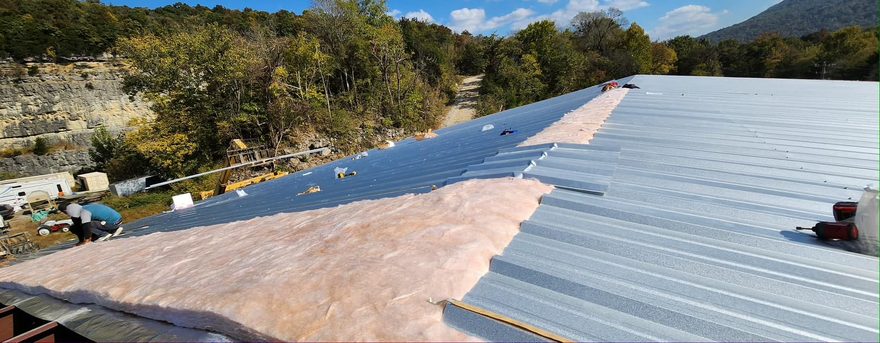
Metal covers shops, warehouses, agricultural buildings and metal buildings of every size, and standing seam has become the preferred choice for commercial buildings throughout the Sequatchie Valley. It comes in three main forms.
- Standing seam. Long panels join at raised seams and the fasteners sit under the panel, out of the weather. On our commercial roof replacement page we put its life at 40 to 60 years or more with very little maintenance. It costs more than panel metal.
- Exposed-fastener panel. Ribbed panels are screwed through the face into the purlins. It is a strong, lower-cost choice for warehouses, agricultural buildings and large metal structures. The tradeoff is upkeep: those screws and their washers age and should be checked over the years.
- Corrugated. The wave pattern adds stiffness, and modern corrugated panels come with protective coatings. It suits agricultural, industrial and light commercial buildings.
For the national price ranges on metal, our guide to metal roofing cost compares standing seam and ribbed panel with sources.
Single-Ply Membranes: TPO, EPDM and PVC
Single-ply roofs are one layer of membrane, rolled out in wide sheets and sealed at the seams. They are the usual answer for a flat or low-slope commercial roof.
- TPO (thermoplastic polyolefin) is a white blend of synthetic rubber and polypropylene. The seams are welded with hot air, and the white surface reflects much of the sun. This Old House notes it resists oil and grease, which EPDM does not. It is the flat roof membrane we install on low-slope commercial roofs.
- EPDM is a synthetic rubber sheet laid in large pieces, so it has fewer seams. It resists scuffs and punctures, but the standard black version absorbs heat, and the seam adhesives can degrade over time.
- PVC is a thermoplastic membrane that is naturally fire-retardant, according to the Cool Roof Rating Council. This Old House notes PVC has been used for decades, while TPO is newer.
The grease point matters more than it sounds. Carlisle’s owner’s manual (Carlisle is a membrane manufacturer) tells owners not to exhaust animal fats or vegetable oils directly onto an EPDM roof, and to clean them off TPO and PVC regularly. On a restaurant or any building that vents cooking exhaust onto the roof, that alone can decide the membrane.
Built-Up Roofing and Modified Bitumen
These are the older, layered flat roof systems, and plenty of them are still on buildings in the region.
- Built-up roofing (BUR), the classic “tar and gravel” roof, is alternating layers of asphalt and reinforcing felt, usually topped with gravel. It has a long track record and good fire resistance, but it is heavy, and with several layers a leak can be hard to trace.
- Modified bitumen is asphalt with rubber or plastic polymers added, applied in layers with a cap sheet by torch, cold adhesive or peel-and-stick. It handles temperature swings and moderate foot traffic, and reflective cap sheets are available. This Old House says it needs more maintenance than single-ply systems.
If your building has one of these roofs, it can often be repaired rather than replaced. Our commercial roof repair crew works on TPO, modified bitumen, built-up and metal panel roofs.
Roof Coatings
A coating is a liquid applied over an existing roof surface. The Cool Roof Rating Council separates elastomeric coatings, which have an added polymer that keeps them flexible, from harder non-elastomeric ones. On metal, reflective coatings can help keep a building cooler in summer; we install metal roofing with ENERGY STAR-rated reflective coatings. A coating is a surface treatment, not a fix for a roof with a failing deck or widespread damage.
How to Choose a System for Your Building
After the slope, these are the questions that narrow the list:
- What is under the roof? Inventory, equipment or occupied offices raise the cost of any leak, which pushes toward the system with the fewest weak points.
- What goes on top of it? HVAC units, exhaust fans and pipes all need flashing, and each penetration is a place a flat roof can leak. Grease exhaust rules out some membranes.
- How much foot traffic? Roofs that technicians visit often need walkways and a membrane that tolerates traffic.
- How hot does the building get? A white TPO membrane or a reflective coating on metal can reduce cooling loads on a building with a large roof.
- What is there now? The condition of the existing roof and the deck decides whether you can re-roof or need a full tear-off.
- How long will you own the building? Metal costs more up front but lasts far longer than any membrane.
Commercial Roofs in the Tennessee Valley
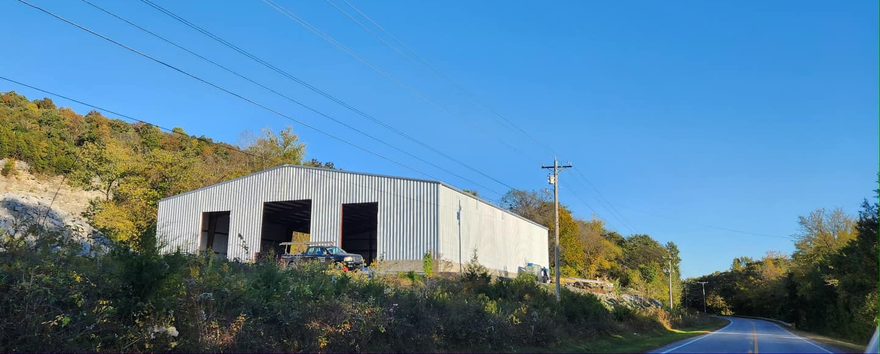
The weather here works every commercial roof hard: hot, humid summers, severe thunderstorms with hail and high winds, heavy spring rain and winter ice. Metal sheds that weather well, and flat roofs here need their drains and seams kept in shape to reach their full life.
Every commercial project with us starts with a free inspection and a written estimate. We look at the roof surface, seams, flashing, drainage and penetrations, then tell you honestly whether repair, re-roofing or replacement fits the building, and we handle the permit applications and inspections the work requires. Whatever system you have, it lasts longer with regular checks; our guide to roof inspection cost explains what an inspection covers.
We work on commercial roofs in Jasper, South Pittsburg, Chattanooga, Scottsboro and Huntsville. To have yours looked at, see our commercial roofing services or use the form on this page.
Commercial Roofing Types Questions
What type of roof do commercial buildings have?
Pitched commercial buildings such as shops, warehouses and metal buildings usually have metal roofs: standing seam, exposed-fastener panel or corrugated. Flat and low-slope commercial roofs usually have a single-ply membrane (TPO, EPDM or PVC) or an asphalt-based system such as built-up roofing or modified bitumen.
What is the longest-lasting commercial roof?
Metal. InterNACHI figures published by This Old House put metal roofs at 40 to 80 years, against roughly 7 to 30 years for the flat roof systems. Standing seam metal, with its concealed fasteners, lasts 40 to 60 years or more.
Is TPO or EPDM better for a flat roof?
It depends on the building. TPO is white, reflects much of the sun, has hot-air-welded seams and resists oil and grease. EPDM is a durable rubber sheet with fewer seams, but black EPDM absorbs heat and should not take cooking exhaust. On a restaurant or a building with a large cooling load, TPO is usually the better fit.
What is a built-up roof?
A built-up roof, often called tar and gravel, is made of alternating layers of asphalt and reinforcing felt, usually topped with gravel. It is durable and fire resistant but heavy, and leaks can be hard to trace through the layers.
Do you install TPO roofs?
Yes. We install flat roof systems, including TPO, with close attention to drainage, seams and the flashing around HVAC units and other penetrations. We also install standing seam, metal panel and corrugated metal roofs, and we repair TPO, modified bitumen, built-up and metal panel roofs.
How do I know which commercial roof system my building needs?
Start with a free commercial roof inspection. We look at the slope, the existing roof and deck, drainage and rooftop equipment, then give you a written estimate and tell you honestly whether repair, re-roofing or replacement makes sense.