
Based on the Insurance Institute for Business & Home Safety (November 19, 2025) and the Asphalt Roofing Manufacturers Association.
The best rated roof shingles are the ones that score well on the tests that matter for your weather, not the ones with the biggest ad budget. For most homes in the Tennessee Valley, that means an architectural (laminated) shingle with a high wind rating, and if hail is a worry, a shingle rated UL 2218 Class 4 that also earned a “Good” in the independent hail tests run by the Insurance Institute for Business & Home Safety. Every major brand makes shingles at several levels, so the rating on the bundle tells you more than the name on it.
We are the Afford-A-Pro team in Jasper, and we install architectural shingles as well as metal roofs. This guide explains the shingle types, what each rating on the label means, how the independent hail ratings differ from the manufacturer’s, and how to choose. If you are planning a new roof, our roof replacement page explains how we handle the whole job.
In this guide
- Which type of roof shingle is best?
- Impact ratings: what Class 4 means
- The independent hail ratings
- Wind ratings on the label
- How to choose shingles for a Tennessee Valley home
- Why the install matters as much as the shingle
- Shingles or metal?
- Shingle questions
Which Type of Roof Shingle Is Best?
Asphalt shingles come in a few basic forms. The Asphalt Roofing Manufacturers Association describes the three-tab as the most common type of strip shingle, and laminated shingles as containing more than one layer of tabs for extra thickness, also called three-dimensional or architectural shingles.
| Type | What it is | Where it fits |
|---|---|---|
| Three-tab (strip) | A single flat layer cut into three tabs. The lowest cost and the flattest look. | Sheds, rentals and tight budgets. |
| Architectural (laminated) | Two or more layers bonded together for thickness and a shadowed, dimensional look. | Most homes. Better wind resistance and longevity than three-tab. |
| Designer (premium laminated) | Heavier laminated shingles shaped to look like slate or wood shake. | Homes where the look matters most. |
| Impact-resistant | Usually an architectural shingle built and tested to resist hail, rated UL 2218 Class 3 or 4. | Homes in hail-prone areas, or where the insurer gives a credit. |
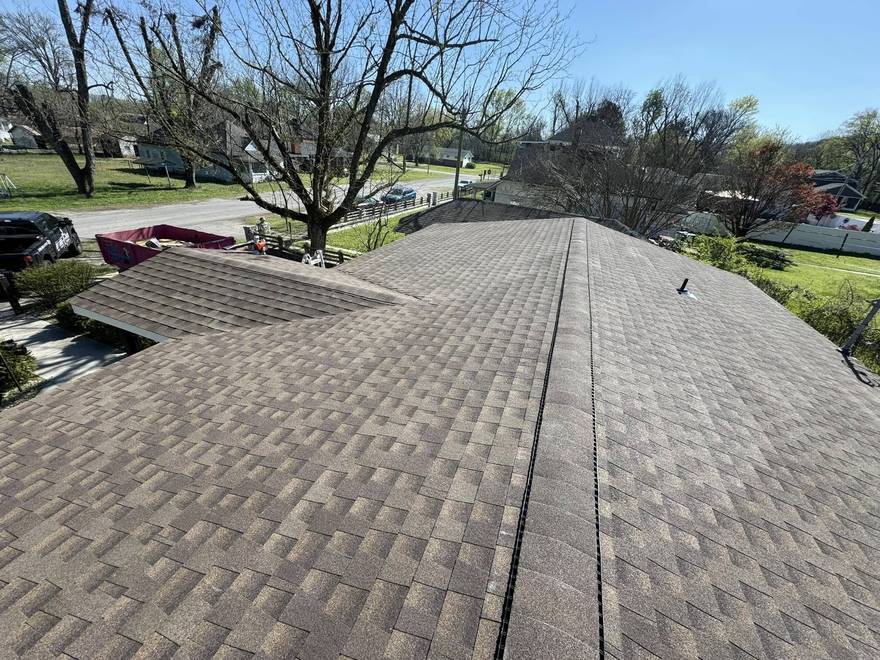
Architectural shingles are the most popular residential choice for a reason: they give a classic look with significantly better wind resistance and longevity than three-tab, at a price well under metal. It is the shingle we install, alongside metal panels and standing seam.
Impact Ratings: What Class 4 Means
The rating most people mean when they say “best rated” is the impact class. Under the UL 2218 test, a steel ball between 1.25 and 2 inches across, depending on the class, is dropped from 12 to 20 feet onto the shingle, as Asphalt Magazine explains. There are four classes, and Class 4, the 2-inch ball, is the highest.
A Class 4 label tells you the shingle passed that test in a lab. It doesn’t tell you how it handles real hail, which is ice rather than steel, and comes in sideways with the wind.
The Independent Hail Ratings
That gap is why the Insurance Institute for Business & Home Safety tests shingles itself, firing lab-made hailstones at them rather than steel balls. Its 2025 ratings, released November 19, 2025, covered a record 24 impact-resistant shingle products, which it says is about 95% of the impact-resistant shingles sold each year.
- The scale is Excellent, Good, Marginal or Poor, with a numerical score for each product.
- Most products earned Good. None reached Excellent.
- IBHS does not recommend a product rated Marginal or Poor in areas that get hail.
The message from IBHS is simple: not all “impact-resistant” shingles perform the same. If you are paying extra for a hail-rated shingle, look the product up in the IBHS impact ratings before you buy, and choose one rated Good.
Wind Ratings on the Label
Wind is the other half of the label, and in a valley that sees strong spring storms and straight-line winds, it matters as much as hail. Shingle wraps usually show one of two wind tests:
| Test | Top class | What it means |
|---|---|---|
| ASTM D3161 | Class F | Passed a two-hour fan test at 110 mph. |
| ASTM D7158 | Class H | Passed an uplift test rated up to 190 mph. Class G is rated to 150 mph and Class D to 115 mph. |
Source: Mark S. Graham, “The wind resistance of shingles,” Professional Roofing (NRCA), September 2018.
The speeds in the two tests are measured in different ways, so the numbers don’t compare directly, and the NRCA advises using D7158 with some caution under newer codes. The practical rule: look for Class F or Class H on the wrapper, and know that a wind rating only holds if the shingles are nailed and sealed the way the manufacturer requires.
How to Choose Shingles for a Tennessee Valley Home
Put the ratings together with the weather here and the choice gets simpler:
- Start with architectural. For most homes it is the best balance of look, wind resistance and cost.
- Check the wind rating. Class F or Class H on the label.
- Decide on hail. If your area has seen hail, or your insurer offers a credit for an impact-rated roof, go with Class 4 and an IBHS Good. Ask your agent before you choose; the credit varies by insurer.
- Think about moss and algae. The humid summers here grow algae streaks on shingles, so an algae-resistant shingle is worth asking about, especially under trees.
- Pick the color last. Architectural shingles come in a wide range of colors and profiles, and color doesn’t change the ratings.
Why the Install Matters as Much as the Shingle
A shingle only performs at its rating when it goes on the way the manufacturer specifies. That is also what keeps the manufacturer’s warranty valid. On every replacement we install materials to manufacturer specifications, and we choose products rated for high wind speeds and impact resistance where the home calls for them.
The layer under the shingles matters too. During every tear-off we inspect the decking and replace any boards that are rotted, water-damaged or weak. New shingles over bad decking never perform correctly, whatever the rating on the wrapper. For what a full replacement costs by roof size, see our guide to roof replacement price.
Shingles or Metal?
If you are comparing the best shingles with metal, the trade-off is cost against lifespan. Architectural shingles cost less up front. Standard asphalt shingles last about 15 to 20 years, while a properly installed metal roof can last 50 years or more, and standing seam has a lifespan of 40 to 70 years. Steel also resists the granule loss hail causes on shingles, though very large hail can still dent it.
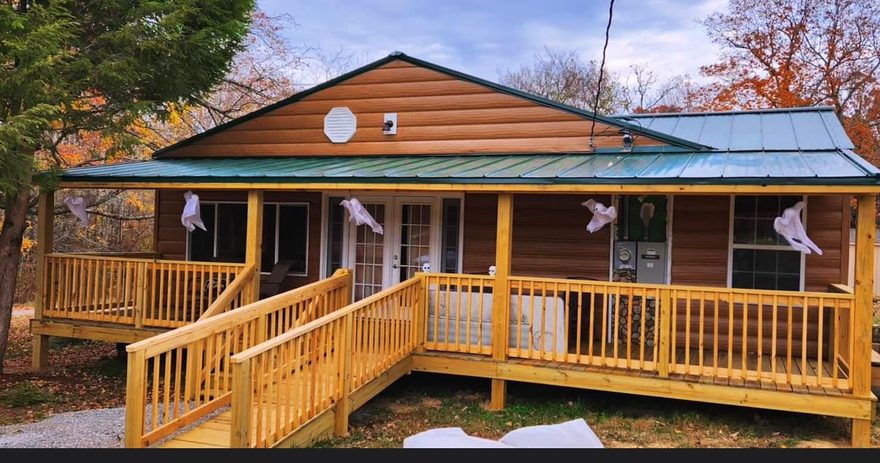
Our guide to metal roofing cost puts the two side by side with sourced prices. Your free estimate can include both, so you can compare them for your own roof.
We install shingle and metal roofs in Jasper, Kimball, Monteagle, Signal Mountain and across the Sequatchie Valley. To talk through options for your home, see our roof replacement service or use the form on this page.
Shingle Questions
What is the best type of roof shingle?
For most homes, an architectural (laminated) asphalt shingle. It has more than one layer for thickness, a dimensional look, and better wind resistance and longevity than three-tab shingles, at a lower cost than metal.
What is a Class 4 shingle?
A shingle that passed the top class of the UL 2218 impact test, in which a 2-inch steel ball is dropped onto it. Class 1 to 3 use smaller balls from lower heights. It is a lab rating, so the independent IBHS hail ratings are worth checking too.
Are all impact-resistant shingles the same?
No. In IBHS testing with lab-made hailstones, most of the 24 impact-resistant products rated Good, none rated Excellent, and IBHS does not recommend products rated Marginal or Poor in areas that get hail.
What wind rating should shingles have?
Look for ASTM D3161 Class F or ASTM D7158 Class H on the wrapper. The rating only holds when the shingles are installed the way the manufacturer specifies.
How long do asphalt shingles last?
Standard asphalt shingles typically last about 15 to 20 years. Architectural shingles last longer than three-tab, and attic ventilation, maintenance and the quality of the installation all affect how long a roof lasts.
Do you install architectural shingles?
Yes. We install quality-grade architectural asphalt shingles from leading manufacturers, as well as metal panels and standing seam roofs, and we go over material options with you before the job begins.