
Based on NOAA’s National Severe Storms Laboratory and Tennessee Department of Commerce and Insurance guidance (January 30, 2026).
A hail damage roof inspection is a close look at the roof after a hailstorm to find impact damage and record it before it turns into a leak. The roofer checks the shingles or metal panels, the ridge cap, the flashing and vents, the gutters and the attic, and photographs every sign of hail. If hail the size of a quarter or larger fell at your house, it is worth having the roof inspected even if nothing is leaking yet.
We are the Afford-A-Pro team in Jasper. This guide covers how big hail has to be to matter, what hail damage looks like on shingle and metal roofs, what a hail inspection checks, what to do before the roofer arrives, and how to avoid the storm chasers who follow hail through the valley. To book one, see our free roof inspection service.
In this guide
- Should you get your roof inspected after a hail storm?
- How big does hail have to be?
- What hail damage looks like on a roof
- The hail damage roof inspection checklist
- What to do before the inspection
- Storm chasers and how to check a roofer
- What we document for you
- Hail inspection questions
Should You Get Your Roof Inspected After a Hail Storm?
Yes, if the hail was big enough to leave marks on anything else. The National Roofing Contractors Association recommends an extra roof inspection after any severe weather event, and it names hailstorms specifically.
The reason is timing. Hail damage on a roof often doesn’t leak right away. A shingle that lost its granules in one spot, or a cracked mat under the surface, can hold for months before water finds it. By then it is harder to tie the damage to a single storm, and harder to show an insurer which storm did it.
Spring storms in the Tennessee Valley bring high wind and hail, and North Alabama towns like Scottsboro and Huntsville see the same spring hail. Check the roof after any storm that dented a car, shredded plants or left ice piled in the yard.
How Big Does Hail Have to Be?
NOAA’s National Severe Storms Laboratory considers hail quarter size or larger, about 1 inch across, to be severe. Here is how its size guide lines up with what to check:
| Hail size (NOAA) | Diameter | What to do |
|---|---|---|
| Pea | 1/4 inch | Below the severe mark. Check the gutters and look for anything unusual. |
| Quarter | 1 inch | Severe hail. Look for dents on gutters, vents and downspouts and get the roof inspected. |
| Golf ball | 1 3/4 inches | Well past the severe mark. Get the roof inspected. |
Sizes from NOAA National Severe Storms Laboratory, “Severe Weather 101: Hail”.
Size isn’t the only factor. Wind drives hail sideways into one face of the roof, an older roof breaks more easily than a new one, and the material matters. If you are not sure how big it got at your house, NOAA’s Storm Events Database lets you search reported hail by state and county, which also helps you pin down the date of the storm.
What Hail Damage Looks Like on a Roof
On a shingle roof
- Dark spots where the hit knocked the granules off and exposed the asphalt underneath.
- Soft bruises that give a little when pressed, a sign the mat below cracked.
- Cracked or split shingles, often on the ridge cap and the edges, which take the hardest hits.
- Granules piled in the gutters or at the downspout outlets after the storm.
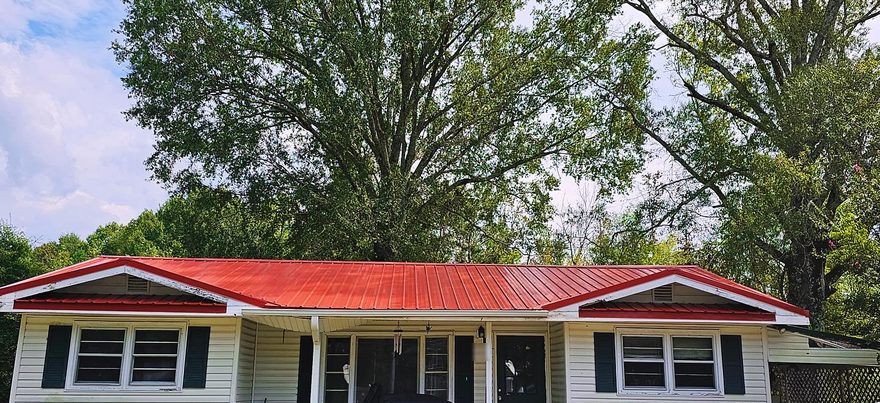
On a metal roof
- Dents in the panels or trim. Steel panels resist the punctures and granule loss hail causes on shingles, but very large hail can still dent metal, especially softer or thinner panels.
- Chipped paint at the point of impact, which can let rust start on the exposed steel.
- Damaged trim, ridge cap and flashing, the thinner pieces that bend first.
- Loose or damaged fasteners on a ribbed panel roof, where the screws pass through the face.
The Hail Damage Roof Inspection Checklist
A real hail inspection goes well past a look at the shingles. This is the order we work in:
| Area | What we look for |
|---|---|
| Ground walk-around | Dents on gutters, downspouts and window trim, which show how big the hail got and which direction it came from. |
| Roof surface | Granule loss, bruises and cracks on shingles; dents and chipped paint on metal; every slope, since one side usually takes more. |
| Ridge cap and edges | Cracked or broken caps and edge pieces. |
| Vents, pipe boots and flashing | Dents in the metal and splits in the rubber boots, where water gets in first. |
| Skylights and chimney | Cracked glazing and damaged flashing around the chimney. |
| Attic | Daylight through the boards, fresh moisture stains and damp insulation. |
| Photos | Every finding photographed, with wide shots that show where on the roof it is. |
The soft metal check matters more than people expect. Dents on a gutter or a vent cap are easy to see and hard to argue with, and they back up what is on the roof.
What to Do Before the Inspection
- Stay off the roof. Hail leaves the surface slick with ice and loose granules. The NRCA does not recommend homeowners walk on roofs.
- Photograph what you can see from the ground. TDCI tells Tennessee homeowners to document damage with photos or video. Get the hail itself if it is still on the ground, with a coin or ruler beside it.
- Write down the date and time of the storm.
- Check inside. Look at ceilings and, if it is safe, the attic.
- If you plan to file, file promptly. TDCI says to file as soon as possible and notes that a policy may set a deadline for telling the insurer. Keep notes on who you talk to.
If water is already coming in, our emergency roofing crew can tarp the damaged area first. For how insurers decide what they cover, see our guide to whether home insurance covers a roof leak.
Storm Chasers and How to Check a Roofer
Hail brings out-of-town crews who knock on doors the next morning. The Tennessee Department of Commerce and Insurance warns homeowners about door-to-door and telephone solicitations after storms, and its January 2026 notice lists the checks worth making:
- Check the license at verify.tn.gov, and ask whether the licensed contractor will do the work with their own employees.
- Ask for proof of licenses, building permits, insurance and bonding, and at least three references.
- Watch the deposit. For home improvement projects, Tennessee law limits deposits to one-third of the contract price. Don’t pay in full before the work is done.
- Take your time. Don’t sign anything on the spot or before you have had time to read it.
A local roofer is still here when the next storm comes through. That matters if something needs attention a year later.
What We Document for You
Your policy and your insurance carrier decide coverage. What we give you is a clear record of the roof:
- A free inspection with no obligation and no service call fee.
- A written report with photos of storm damage, hail impact and wind damage that you can give your insurance company.
- Help with the claim if storm damage is found.
- A straight answer. If the roof is fine, we tell you that too. If the damage looks like age or wear instead of hail, you hear that from us.
- A free estimate for any repair or replacement the roof needs.
We inspect roofs in Jasper, South Pittsburg, Chattanooga, Bridgeport and across the Sequatchie Valley. On the Alabama side, the inspection is the same, but your policy falls under Alabama’s insurance department rather than Tennessee’s. To set one up, see our roof inspection service or use the form on this page.
Hail Inspection Questions
Should I get my roof inspected after a hail storm?
Yes, if the hail was about quarter size or larger, or if it dented gutters, vents or cars. The NRCA recommends an extra roof inspection after severe weather such as a hailstorm. Hail damage often does not leak right away, so an inspection soon after the storm finds it while it is still easy to tie to that storm.
What size hail damages a roof?
NOAA's National Severe Storms Laboratory treats hail 1 inch across, about the size of a quarter, as severe. Whether it damages a given roof also depends on wind, the age of the roof and the material, so check for dents on soft metal and have the roof looked at after any severe hail.
Can hail damage a metal roof?
Steel panels resist the punctures and granule loss hail causes on shingles, but very large hail can still dent metal, especially softer or thinner panels. Trim, ridge cap and flashing usually show it first.
What does a hail damage roof inspection include?
A walk-around for dents on gutters and downspouts, a check of every slope of the roof surface, the ridge cap, vents, pipe boots, flashing, skylights and chimney, a look in the attic for moisture, and photos of every finding.
How long after a hail storm can I file a claim?
It depends on your policy, which may set a deadline for telling your insurer. The Tennessee Department of Commerce and Insurance advises filing as soon as possible. Your declarations page or your agent can tell you the exact rule.
Do you charge for a hail damage roof inspection?
No. Our roof inspections are free with no obligation and no service call fee. You get a written report with photos that you can give your insurance company.