
Based on the National Roofing Contractors Association and the Metal Roofing Alliance.
Roof maintenance is the routine care that keeps a roof shedding water the way it was built to: clear gutters and valleys, tight flashing and sealant, no debris or moss holding moisture against the surface, and a careful look at the whole roof a couple of times a year. The National Roofing Contractors Association recommends inspecting a roof at least twice a year, preferably in spring and fall, and again after severe weather like a hailstorm or tornado.
We are the Afford-A-Pro team in Jasper, and we maintain roofs across the Sequatchie Valley. This checklist covers what to do each season, what you can safely check from the ground, how care differs for metal and shingle roofs, and when it is time to call a roofer. If you would rather hand the whole list to someone else, our roof maintenance service covers it in one visit.
In this guide
- Why roof maintenance matters here
- A season-by-season roof maintenance checklist
- What you can check from the ground
- Maintenance on a metal roof
- Maintenance on a shingle roof
- What a professional maintenance visit includes
- When maintenance turns into a repair
- Roof maintenance questions
Why Roof Maintenance Matters in the Sequatchie Valley
The weather here works on a roof from every direction. Summers are hot and humid, spring brings heavy rain and strong thunderstorms, and winter can bring ice storms and freeze-thaw cycles. Each of those speeds up the same handful of problems: sealant that cracks, shingles that lose granules, gutters that clog, and moss and algae that grow in the damp.
Trees make it harder. Much of the valley and the mountain towns are heavily wooded, so leaves and limbs pile into valleys and gutters every fall. On the plateau, in places like Monteagle and Tracy City, shade and higher humidity mean more moss. That is why we suggest a second visit each year for roofs under heavy tree cover.
None of these problems is expensive when it is caught early. A dried-out sealant bead is a small fix. The same bead left alone for a few years can let water into the decking, and then the job is a repair instead of upkeep. In our experience, regular maintenance can add 5 to 10 years to a roof’s working life.
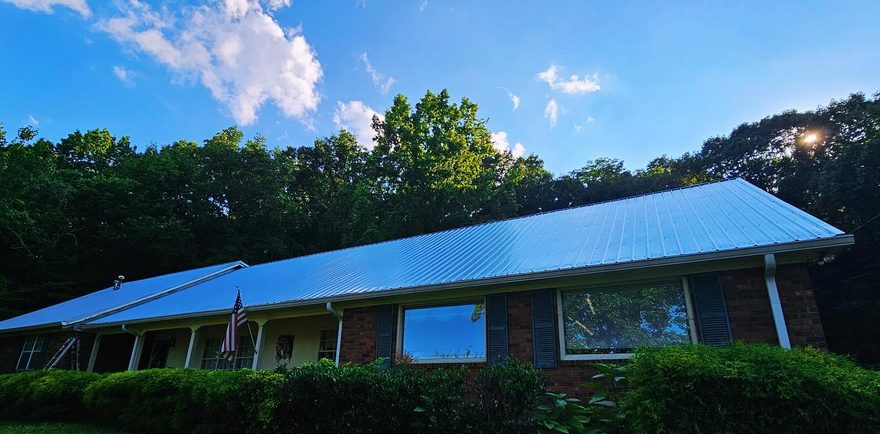
A Season-by-Season Roof Maintenance Checklist
This is the checklist we would give a neighbor. The ground-level items are safe for most homeowners. Anything on the roof surface is a job for someone with the right equipment.
| When | What to check | Who |
|---|---|---|
| Spring | Look for winter damage: missing or lifted shingles, loose flashing, cracked pipe boots. Clear gutters and downspouts before the storm season. | You from the ground, then a roofer |
| Summer | Trim branches back from the roof. Watch ceilings for new stains after heavy rain. Look for moss or dark streaks on shaded slopes. | You |
| Fall | Clear leaves from gutters and valleys after the trees drop. Have the roof inspected and resealed before winter. | A roofer |
| Winter | After ice or snow, check for icicles or water backing up at the eaves, and for leaks in the attic. | You from inside and the ground |
| After any major storm | Walk the yard for shingles, metal trim or limbs. Check gutters and soft metal for dents. Photograph anything you find. | You, then a roofer if you find damage |
If you only do one professional visit a year, make it the fall one. It sets the roof up for winter and catches whatever the summer storms left behind.
What You Can Check From the Ground
The NRCA does not recommend that homeowners walk on roofs unless they have the experience and equipment for it, and it notes that a steep roof can usually be checked from the ground or a ladder. The Metal Roofing Alliance says the same thing in plainer words: do not get on ladders or rooftops if you are not comfortable, equipped and well prepared. A pair of binoculars does most of the work.
- Shingles: curled, cracked, split or missing pieces, and bare patches where the granules have worn away.
- Gutters: sagging runs, water spilling over the front in a hard rain, and a pile of granules at the downspout outlets.
- Flashing: metal at the chimney, walls and skylights that has lifted, rusted or pulled away.
- Vents and pipe boots: covers that are cracked or out of place.
- Moss and algae: green growth or black streaks, most often on the north side and under trees.
- Inside: stains on the ceiling, and in the attic, daylight through the boards, damp insulation or a musty smell.
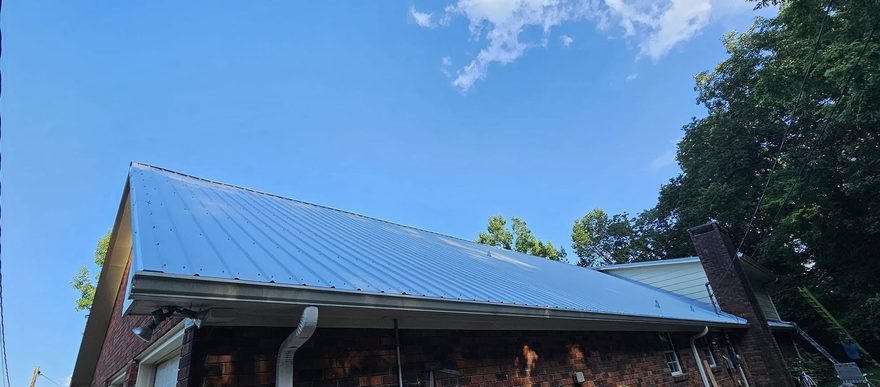
Maintenance on a Metal Roof
A metal roof is low-maintenance, but it is not no-maintenance. Most of the care comes down to keeping water moving and keeping the fasteners and trim tight.
- Keep gutters and valleys clear. Wet leaves sitting against the panels hold moisture against the finish.
- Check exposed fasteners. Ribbed panel roofs are screwed through the face, and those screws and washers need checking over the years. Standing seam hides its fasteners, which removes that step.
- Look at the trim and flashing. Ridge cap, rake trim and the flashing around chimneys and pipes are where a metal roof usually leaks.
- Clean it gently. The Metal Roofing Alliance suggests a garden hose for everyday dirt, and for more, a mix of about 1/4 cup of mild detergent per gallon of water, left on for 5 to 10 minutes and rinsed off. It says never to use a power washer, steel wool, wire brushes, scouring powders, paint removers or thinners on a metal roof.
- Follow the manufacturer. The MRA also says to follow the panel maker’s instructions, which helps protect the roof’s warranty.
For more on how metal holds up to wind, heat and hail, see our metal roofing page.
Maintenance on a Shingle Roof
Asphalt shingles need a little more attention in a humid climate. The main jobs are drainage, sealant and growth.
- Watch the granules. Some loss is normal, especially on a new roof. A lot of granules in the gutters on an older roof is a sign the shingles are wearing out.
- Reseal the penetrations. Dried, cracked sealant at chimneys, vents and pipe boots is a leading cause of leaks.
- Deal with moss early. Moss holds moisture against the shingles, and algae streaks point to growth that speeds up granule loss. We treat affected areas and can suggest zinc or copper strips to slow it down.
- Keep branches back. Limbs rubbing on shingles scrape off granules, and a dead limb is a storm risk.
What a Professional Maintenance Visit Includes
When we do a maintenance visit, it follows the same order every time:
- A full inspection of the roof surface, flashing, vents, ridge cap and the attic if it is accessible, with photos.
- Gutter cleaning and downspout flushing, with the hangers and attachment points checked.
- Sealant and flashing refresh at the chimney, vents and pipe boots where it has dried or cracked.
- Debris removal from the valleys and any low-slope areas.
- Moss and algae treatment where it is growing.
- Small repairs on the spot when possible, like a cracked sealant bead or a loose section of flashing.
- A written condition report that says what we found, what we did and what to watch at the next visit.
That report is worth keeping. Insurance does not pay for routine upkeep, but a record of regular maintenance shows a roof was cared for if you ever file a storm claim. Our guide to whether home insurance covers a roof leak explains why that matters.
When Maintenance Turns Into a Repair
Some things a maintenance visit can’t fix. These are signs the roof needs a repair or a closer look:
- Water stains on a ceiling or wet spots in the attic.
- Soft or sagging spots in the roof deck.
- Shingles missing in several places, or flashing that has come loose after a storm.
- Leaks that keep coming back in different places.
On an older roof, a pattern of these can mean replacement makes more sense than another repair. Our guide to roof replacement price covers what a new roof costs by size if you reach that point.
We work with homeowners in Jasper, South Pittsburg, Whitwell, Kimball and across the Sequatchie Valley. To get on a schedule, see our roof maintenance service or use the form on this page.
Roof Maintenance Questions
How often does a roof need maintenance?
The National Roofing Contractors Association recommends inspecting a roof at least twice a year, in spring and fall, and after severe storms. We suggest professional maintenance at least once a year, ideally in the fall, and twice a year for roofs under heavy tree cover or on the shaded, humid plateau.
What should a roof maintenance checklist include?
Clean gutters and downspouts, clear valleys of leaves, check flashing and sealant at the chimney, vents and pipe boots, look for missing or damaged shingles or loose metal trim, treat moss and algae, trim back branches, and check the attic for stains or damp insulation.
Does a metal roof need maintenance?
Less than a shingle roof, but some. Keep gutters and valleys clear, have exposed fasteners and trim checked over the years, and clean it gently. The Metal Roofing Alliance says never to use a power washer, steel wool or wire brushes on a metal roof.
Is roof maintenance covered by homeowners insurance?
No. Routine upkeep is the homeowner's responsibility. A record of regular maintenance can still help if you later file a storm damage claim, because it shows the roof was cared for.
Is it safe to do my own roof maintenance?
Most of it can be done from the ground with binoculars, from a ladder at the gutters, or from inside the attic. The NRCA does not recommend that homeowners walk on roofs unless they have the experience and equipment, so leave work on the roof surface to a roofer.
Do you offer recurring roof maintenance plans?
Yes. We schedule recurring annual or bi-annual maintenance visits. Regular maintenance customers get priority scheduling and a crew that knows their roof's history.